· Updated ·  Sathyanand S · Tools & Resources · 20 min read
Is vidIQ Worth It? Only If You Want Views, Not Leads
vidIQ scores your videos for views and subscribers. If your business needs leads, demos, and customers from YouTube, you need tools that score for buyer intent instead.

You search “how to get leads from YouTube” in vidIQ’s keyword tool. It returns a difficulty score, a search volume estimate, and a list of related keywords like “how to grow on YouTube” and “YouTube algorithm tips.” All creator queries. None of them will put a prospect in your pipeline.
This is not a bug. vidIQ was built for creators who measure success in views and subscribers. Over 2 million people use it, and for that goal, it works. But if you are a business using YouTube to generate leads, demos, or paying customers, vidIQ’s scoring system is measuring the wrong things entirely.
This post breaks down what vidIQ does well, where it fails for business channels, and what tools are purpose-built for YouTube as a customer acquisition channel.
vidIQ is worth it for creators optimizing for views and subscribers. For businesses using YouTube to acquire customers, it falls short. Its keyword tools favor trending topics over buyer-intent queries, its SEO score measures creator metrics, and it offers no framework for connecting video performance to lead generation. Business channels need tools that score for commercial intent, not virality.
Last updated: June 2026. How we evaluated: hands-on use of each tool plus the most recent third-party ratings we could verify (Chrome Web Store, Capterra, AppSumo). Ratings link to the source listing. We do not invent sample sizes or quote reviews we have not read.
One nuance up front: vidIQ, TubeBuddy, Semrush, Ahrefs, and Taja AI all carry strong third-party ratings. This is not a quality argument. It is a fit argument. They are well-built tools for creator growth and SEO research. The question is whether they fit a business using YouTube as a customer acquisition channel.
Key Takeaways
- vidIQ’s keyword research surfaces trending and high-volume topics, not buyer-intent queries that drive leads or demo requests
- vidIQ’s SEO score measures creator signals (tags, engagement rate, trending score) with no assessment of commercial relevance
- vidIQ pricing ranges from free to $79/month, with Enterprise at custom pricing, but core tools stay creator-focused at every tier
- SellonTube offers 15 free tools that score videos, keywords, and competitors through a buyer-intent filter
- The gap is not features. It is the scoring framework. Creator tools ask “will this get views?” Business tools should ask “will this get customers?”

Contents
- What vidIQ Does Well
- Where Does vidIQ Fall Short for Business Channels?
- What Is a Buyer-Intent Keyword?
- How to Evaluate a YouTube Tool for Business (Not Creator) Use
- Side-by-Side Comparison
- What vidIQ Actually Costs vs Free Business Tools
- SellonTube: The Business-First Alternative
- What This Looks Like in Practice
- Which Tool Should You Use? A Cheat Sheet
- FAQ
What vidIQ Does Well
Credit where it is earned. vidIQ is a strong tool for what it was built to do, and its users say so. vidIQ rates 4.5/5 on the Chrome Web Store across roughly 10,900 ratings, and 4.3/5 on Capterra from 61 reviews. Those are solid scores for a creator tool. The catch is what they measure: creator satisfaction, not business fit.
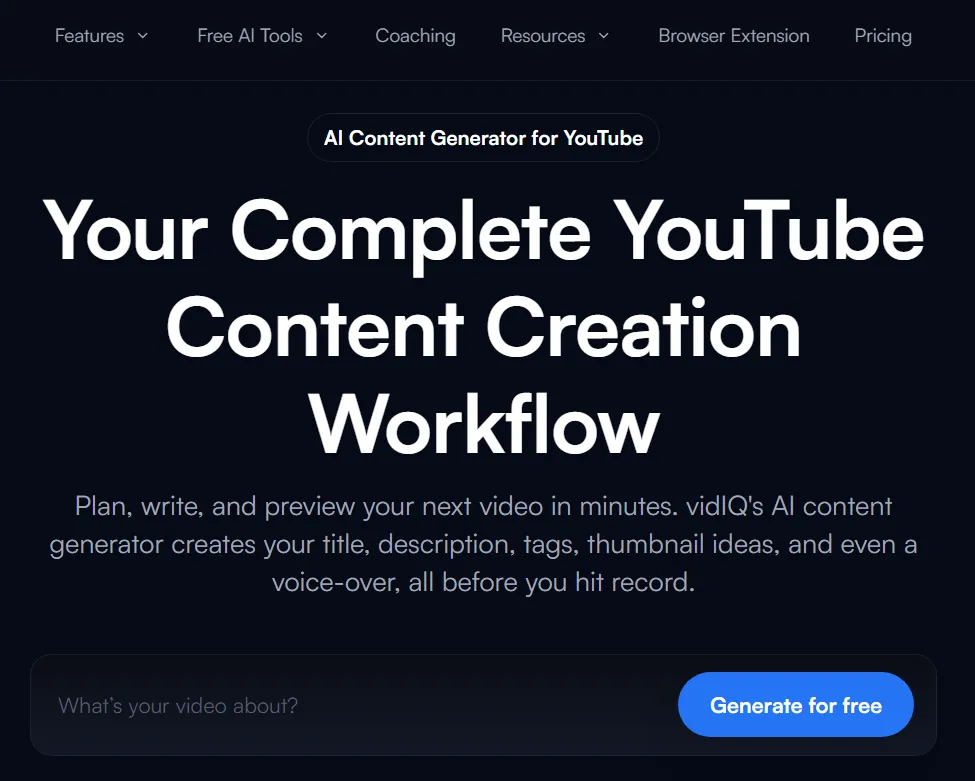
Keyword research depth. vidIQ maintains one of the largest YouTube keyword databases available. You get search volume estimates, competition scores, related keywords, and trend data. For creators trying to identify what topics are gaining traction, this is genuinely useful.
Competitor tracking. You can monitor competing channels, get alerts when they publish, and benchmark your performance against theirs. vidIQ shows you content gaps and publishing patterns that might reveal opportunities.
Trend identification. Daily Ideas, trending topic alerts, and viral video detection help creators ride momentum. If your strategy is “publish what is trending right now,” vidIQ surfaces those signals faster than most tools.
Chrome extension. Real-time stats overlay on every YouTube page. You see view velocity, subscriber counts, and engagement ratios without leaving the platform. It is well-built and genuinely saves time during research sessions.
AI Coach. vidIQ’s newer AI features suggest content ideas, generate title options, and provide optimization recommendations based on your channel’s data. For creators who want AI-assisted brainstorming, it is a useful addition.
Here is where the pricing breaks down across tiers:
| Plan | Price | Key Features | Best For |
|---|---|---|---|
| Free | $0 | Basic stats, 3 daily ideas, channel audit | Trying vidIQ out |
| Pro | $5/mo | Keyword research, competitor tracking, analytics | Hobbyist creators |
| Boost | $39/mo | Bulk SEO, A/B testing, trend alerts, more competitor slots | Active creators publishing weekly |
| Max | $79/mo | AI Coach, extra competitor analysis, promotional tools | Full-time creators scaling output |
| Enterprise | Custom | Dedicated strategist, multi-channel management, custom analytics | Brands managing multiple channels |
Paid-tier prices are approximate and as of June 2026. vidIQ gates exact pricing behind its checkout flow, and annual rates vary by promotion; confirm on vidIQ’s pricing page before buying.
For creators building an audience around entertainment, education, or personality-driven content, vidIQ is genuinely useful. The Pro plan at $5/month is good value for basic keyword research and competitor monitoring.
But here is where it breaks down.
Where Does vidIQ Fall Short for Business Channels?
The problem is not missing features. The problem is the scoring framework. Every metric vidIQ reports, every keyword it suggests, and every optimization it recommends is calibrated for one outcome: more views.
That is the wrong outcome if you are running a business channel.
Keyword research optimizes for volume, not buyer intent. In our testing, searching “project management software” in vidIQ returns related keywords like “productivity tips,” “notion tutorial,” and “best apps for students.” All high-volume. None of them are queries where someone is evaluating a project management tool for their company.
What a business channel needs is keywords like “project management tool for agencies” or “Monday vs Asana for remote teams.” These are lower volume but the people searching them are actively comparing solutions. vidIQ does not distinguish between a viewer and a buyer.
- What most channels do: Pick keywords with the highest search volume from vidIQ, publish videos targeting broad topics, and measure success by view count.
- What actually works: Filter for buyer-intent keywords where the searcher has a problem your product solves, then measure success by leads generated per video.
SEO score measures creator signals. vidIQ’s SEO scorecard evaluates your title, description, tags, and metadata against factors like tag count, keyword density, and engagement predictions. It does not assess whether your metadata aligns with what a decision-maker would search. A video optimized for vidIQ’s SEO score can earn a 95/100 while completely missing the commercial keywords your prospects type.
So what does this mean for your business?
No connection between video performance and business outcomes. vidIQ’s analytics dashboard tracks views, watch time, subscriber growth, and engagement rate. These are useful signals for creators. For businesses, the metrics that matter are leads generated, demo requests, pipeline influenced, and cost per acquisition. vidIQ has no framework for any of these. In our experience working with B2B channels, the video with the fewest views is often the one generating the most qualified leads. Volume and value are different metrics.
Enterprise pricing does not fix the foundation. vidIQ Enterprise adds a dedicated strategist, multi-channel management, and custom reporting. These are genuine improvements for large organizations. But the underlying tools still optimize for creator metrics. You get better support on the same measurement framework. Paying more gets you a strategist working with creator-focused data, not a different analytical lens.
Warning
The most expensive mistake is not overpaying for vidIQ. It is spending six months optimizing for views on a business channel and generating zero pipeline to show for it. Every month you optimize for the wrong metric is a month of YouTube budget that produces content nobody on your sales team can use.
What Is a Buyer-Intent Keyword?
A buyer-intent keyword is a search query where the person typing it has a specific problem they are willing to pay to solve. Unlike informational keywords (“what is CRM”) or navigational keywords (“HubSpot login”), buyer-intent keywords signal that the searcher is actively evaluating, comparing, or ready to purchase a solution. Examples include “CRM software for agencies,” “Salesforce vs HubSpot for startups,” and “best project management tool for remote teams.” For business YouTube channels, ranking for buyer-intent keywords means every view has a higher probability of converting into a lead, demo request, or paying customer. This is the fundamental metric that separates a business YouTube strategy from a creator YouTube strategy.
How to Evaluate a YouTube Tool for Business (Not Creator) Use
Most “best YouTube tool” advice grades tools on creator criteria: keyword volume, trend speed, thumbnail testing. Those are the wrong tests for a business. Here are the five criteria that decide whether a tool helps you turn YouTube into a customer acquisition channel.
1. Does it filter for buyer intent, not just volume? A creator tool ranks keywords by search volume and difficulty. A business tool should let you isolate queries where the searcher is comparing or buying (“CRM software for agencies”), not just learning (“what is CRM”). If every keyword suggestion is high-volume and top-of-funnel, the tool is optimizing for the wrong searcher.
2. Does its scoring reward commercial relevance? An SEO score that rewards tag count, keyword density, and engagement predictions is grading for views. A business-fit score should ask whether the title and description match what a decision-maker types when they are ready to evaluate a solution.
3. Can it connect a video to a business outcome? Views, watch time, and subscriber growth are creator metrics. The tool should help you reason about leads, demo requests, and pipeline, even if only by surfacing which videos rank for purchase-ready queries. A tool with no concept of commercial value cannot help you prioritize.
4. Does it surface competitive gaps you can actually win? Volume alone is a trap. The useful question is whether a buyer-intent keyword has beatable competition: few videos, dated content, low view counts on the incumbents. A business tool should score winnability, not just demand.
5. What does it cost relative to the value it returns? A $79/month creator tool that points you at the wrong searcher is more expensive than a free tool that points you at buyers. Price the tool against the outcome it is built for, not its sticker.
These five criteria hold regardless of which tool you pick. They are also the lens for the rest of this comparison.
Side-by-Side Comparison
Before getting into what businesses should use instead, here is how the options compare on the metrics that matter for customer acquisition:
| Tool | Best For | Buyer-Intent Focus | Free Tools | Done-for-You Strategy | Price |
|---|---|---|---|---|---|
| SellonTube | Business YouTube acquisition | Yes, every tool | 15 free tools | $2,500 - $7,500/mo | Free / retainer |
| vidIQ | Creator growth and trends | No | Limited free tier | Enterprise (custom) | $0 - $79/mo |
| TubeBuddy | Workflow and A/B testing | No | Limited free tier | No | $0 - $49/mo |
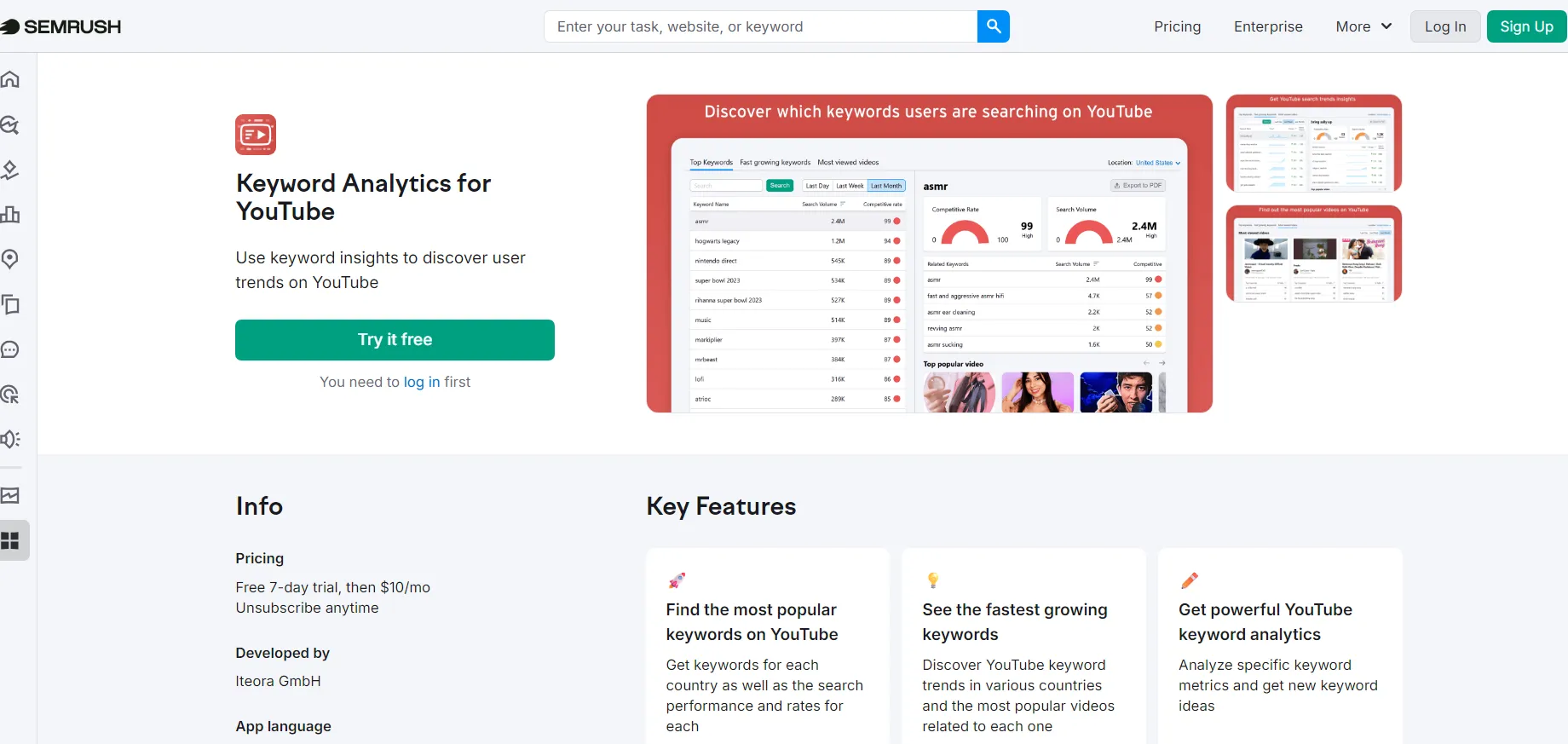
| Semrush | Cross-platform SEO data | Partial | No | No | $139 - $499/mo |
| Ahrefs | Keyword and backlink data | Partial | No | No | $129 - $449/mo |
| Taja AI | AI metadata generation | No | Limited free tier | No | $0 - $99/mo |
Two columns where vidIQ genuinely wins: it has the deepest keyword database of any YouTube-specific tool, and its Chrome extension provides the best in-browser research experience. For pure keyword volume data, vidIQ is hard to beat.
But look at the “Buyer-Intent Focus” column. That is the column that determines whether your YouTube channel generates pipeline or just generates content.
To be clear, these are all well-rated tools. The ratings just measure satisfaction with each tool’s intended job, which is creator growth or SEO research, not B2B YouTube fit:
- TubeBuddy rates 4.5/5 on the Chrome Web Store (about 8,500 ratings) and 4.6/5 on Capterra (113 reviews). Strong workflow and A/B testing tool, still built for creator metrics.
- Semrush rates 4.6/5 on Capterra from 2,322 reviews, one of the deepest review pools in SEO software. It is excellent cross-platform SEO data; it is not a YouTube buyer-intent tool, and its public Trustpilot sentiment skews toward billing complaints, so weigh the subscription commitment.
- Ahrefs rates 4.7/5 on Capterra from 584 reviews. Best-in-class keyword and backlink data, again not YouTube-specific or buyer-intent scored.
- Taja AI rates 4.2/5 on AppSumo from 226 reviews. It is a newer AI metadata tool with no G2 or Capterra listing yet, so treat that single rating accordingly. Fast at generating titles and descriptions; it does not score them for commercial intent.
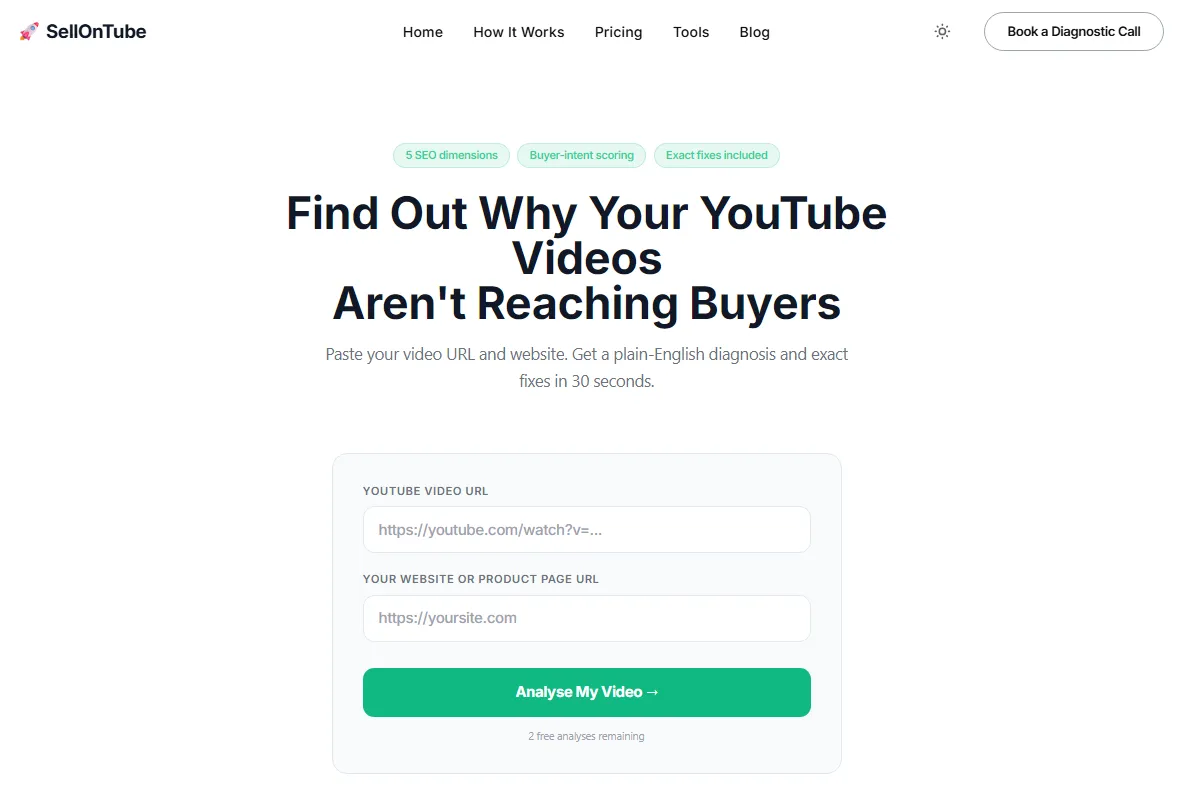
SellonTube is our own platform, so we do not quote a third-party star rating for it. The honest, verifiable claim is that all 15 tools are free (free runs with no signup, then a free business email), and every one scores content for buyer intent rather than views. Judge it on that, and on the worked examples below, not on a rating we control.
Read more: YouTube Marketing Tools: The Complete B2B Stack (2026) for a full breakdown of 12 tools across five categories.
What vidIQ Actually Costs vs Free Business Tools
Here is the money side, stated plainly. Prices are as of June 2026.
vidIQ’s paid tiers run from $5/month (Pro) to $79/month (Max), with Enterprise at custom pricing. On an annual basis, that is roughly $60 a year for Pro, $468 a year for Boost, and $948 a year for Max (paid monthly; annual billing typically discounts these, so confirm at checkout). TubeBuddy’s paid plans land in a similar range, and the SEO suites cost far more: Semrush starts at $139/month ($1,668/year) and Ahrefs at $129/month ($1,548/year) on their entry paid tiers.
SellonTube’s 15 tools are $0 per year. There is no paid tier on the tools; after the free runs, a free business email unlocks the rest. For a business already paying for a broad SEO suite, the relevant comparison is not “vidIQ vs SellonTube” but “keep your SEO suite for keyword data, and add SellonTube’s free tools for the YouTube buyer-intent scoring none of them do.”
The honest version
Replacing a $79/month vidIQ Max plan with SellonTube’s free tools saves about $948 a year. But the real cost of vidIQ for a business is not the subscription. It is six months of videos optimized for the wrong searcher. We will not put a fake dollar figure on that, because it depends on your deal size. The point stands: the cheaper tool here is also the one built for your goal.
SellonTube: The Business-First Alternative
Here is the thing. The gap between creator tools and business tools is not a feature gap. It is a framework gap. Creator tools start with “what is trending?” Business tools should start with “what are buyers searching for?”
SellonTube was built around four capabilities that business YouTube channels need:
Every SellonTube tool evaluates your content through this lens. Not “will this get views?” but “will this get customers?”
SellonTube is a free YouTube toolkit built for businesses that use video as a customer acquisition channel. It includes 15 tools covering keyword research, metadata optimization, competitor analysis, tag generation, channel audits, script writing, and title generation. Try the buyer-intent script generator to see this in action. Every tool scores content against buyer-intent signals rather than creator metrics like views or subscriber growth. The platform is designed for B2B founders, SaaS companies, agencies, coaches, and service businesses with customer lifetime values above $3,000. The title-scoring tool is one example built specifically for that audience. SellonTube also offers done-for-you retainers starting at $2,500 per month for businesses that want strategy, keyword research, and scripts handled by a team specializing in YouTube as a customer acquisition channel.
The YouTube SEO Tool scores your video across five buyer-intent dimensions: title relevance to commercial queries, description quality, keyword coverage for purchase-ready searches, CTA strength, and chapter labels. In our testing, we have seen videos score 90+ on vidIQ’s SEO scorecard while scoring below 40 on buyer-intent alignment. The video was well-optimized for views. It was invisible to buyers.
The Autocomplete Keywords tool filters YouTube’s autocomplete suggestions through buyer-intent modifiers: Comparison, Mistakes, Results, How-To, Research. Instead of “how to use Notion” (creator query), it surfaces “Notion vs Monday for project management” (buyer query).
The Competitor Analysis tool shows you whether a keyword is worth targeting based on beatable signals in the top results, not just volume. The Video Keyword Finder reveals which buyer-intent keywords your existing videos already rank for. The Tag Generator builds tags around commercial search terms. The Channel Audit scores your last 10 videos for business outcomes, not creator metrics.
All 15 tools are free. Start with no signup; a free business email unlocks the rest.
For businesses that want this done for them
SellonTube also offers done-for-you retainers starting at $2,500/month. Strategy, keyword research, scripts, and channel optimization handled by a team that specializes in YouTube as a customer acquisition channel. See pricing and plans.
What This Looks Like in Practice
A B2B SaaS company sells project management software to marketing agencies. They have been publishing YouTube videos for four months using vidIQ to guide their keyword strategy. vidIQ recommended keywords like “productivity tips for teams,” “best project management apps,” and “how to manage remote workers.” All high-volume. All generating views from individuals, not agency buyers.
Here is what changes when they switch to buyer-intent tools.
Using SellonTube’s Autocomplete Keywords tool, they search “project management” and filter for buyer-intent modifiers. The tool surfaces queries like “project management tool for agencies,” “Monday vs Asana for marketing teams,” and “project management software comparison 2026.” Lower volume. Higher purchase intent.
The Competitor Analysis tool shows that “project management tool for agencies” has only three competing videos, all over two years old with under 8,000 views. Beatable.
They create a video targeting that keyword. The YouTube SEO Tool scores their draft metadata at 38/100 on buyer intent. It flags that the title uses generic language (“Best Project Management Tips”) instead of the target keyword. The description lacks a clear CTA for agency decision-makers. After applying the tool’s rewrite recommendations, the score jumps to 82/100.
Now, you might be thinking: “Can’t I just apply this thinking manually with vidIQ?”
You can try. But vidIQ’s keyword suggestions will keep pulling you back toward volume. Its SEO score will keep rewarding creator-style optimization. The tools shape the strategy. When your tools measure views, you optimize for views. When your tools measure buyer intent, you optimize for customers.
Here is a concrete example. We searched “CRM software” as a seed keyword in both vidIQ and SellonTube’s Autocomplete Keywords tool. Look at what each surfaces:
| vidIQ Keyword Suggestions | SellonTube Buyer-Intent Keywords |
|---|---|
| crm tutorial | crm software for small business comparison |
| what is crm | hubspot vs salesforce for startups |
| best crm 2026 | crm implementation mistakes to avoid |
| crm explained | how to migrate from spreadsheets to crm |
| how to use hubspot | crm software results for service businesses |
The left column generates views from people learning about CRM. The right column reaches people actively evaluating or switching CRM tools. If you sell CRM software, the right column fills your pipeline.
Read more: Best YouTube SEO Tools for Businesses (2026) for a deeper comparison of tools across multiple categories.
Decision Guide
Your goal is subscriber and view growth? vidIQ or TubeBuddy. Both are strong creator tools at reasonable prices.
Your goal is leads, demos, or customers from YouTube? SellonTube. Purpose-built for buyer-intent optimization. 15 free tools, no signup to start.
You need cross-platform SEO data alongside YouTube? Semrush or Ahrefs for keyword data, plus SellonTube’s free tools for YouTube-specific buyer-intent scoring.
You want AI-generated metadata fast? Taja AI for speed, then run the output through SellonTube’s SEO Tool to check buyer-intent alignment.
What to Do This Week
- Run your latest video through SellonTube’s YouTube SEO Tool and check your buyer-intent score against whatever your vidIQ SEO score shows
- Search your core product keyword in the Autocomplete Keywords tool and note how many buyer-intent variations appear
- Paste your top-performing video into the Video Keyword Finder to see which buyer-intent keywords you already rank for
- Run a Competitor Analysis on your highest-value buyer keyword and check if the competition is beatable
- Audit your channel with the Channel Audit tool and compare the business-outcome score against your vidIQ channel score
- Look at your last 10 video topics. Count how many target buyer-intent keywords versus trending or high-volume creator keywords
- If the ratio is wrong, book a 30-minute strategy call and we will map out your YouTube acquisition channel together
Which Tool Should You Use? A Cheat Sheet
Match your situation to the recommendation. The reasoning is the same throughout: pick for buyer intent if you sell something, pick for views if you do not.
| Your situation | Best choice | Why |
|---|---|---|
| B2B SaaS founder using YouTube for demos and signups | SellonTube | Buyer-intent keyword and metadata scoring is the whole game for you |
| Solo B2B consultant or coach selling high-ticket services | SellonTube (free tools) | Low volume, high intent, zero budget needed; views are irrelevant |
| Agency running YouTube for multiple B2B clients | SellonTube + a done-for-you retainer | Free tools per client, plus strategy support when scope grows |
| In-house team that already pays for Semrush or Ahrefs | Keep the suite, add SellonTube | Use the suite for keyword data, SellonTube for YouTube buyer-intent scoring |
| Full-time creator chasing subscribers and views | vidIQ or TubeBuddy | Built for creator growth; this is exactly their job |
| Creator who also sells courses or products to viewers | vidIQ or TubeBuddy + SellonTube | Creator tool for reach, SellonTube to score offer-ready videos for intent |
| High-volume publisher needing A/B thumbnail testing | TubeBuddy | Workflow automation and split testing are its strengths |
| You want AI-drafted titles and descriptions fast | Taja AI, then SellonTube | Generate fast, then check buyer-intent alignment before publishing |
FAQ
Is vidIQ worth the money for my business?
Is vidIQ worth it for small businesses?
vidIQ is worth it if your goal is growing subscribers and views. If your goal is generating leads or customers from YouTube, vidIQ lacks buyer-intent keyword filtering, lead-focused metadata scoring, and conversion-oriented strategy tools. SellonTube offers 15 free tools built specifically for that use case.
Can vidIQ help with B2B lead generation on YouTube?
vidIQ Enterprise offers custom strategy support for brands, but its core tools still optimize for views and subscriber growth. For B2B lead generation, you need tools that identify buyer-intent keywords, score metadata for commercial relevance, and connect video strategy to pipeline outcomes. In our experience, the most effective B2B YouTube channels use tools built around commercial intent from the start rather than retrofitting creator tools.
What do vidIQ’s scores actually mean?
What is a good vidIQ score?
vidIQ’s overall score rates a channel’s performance on creator signals, mainly views, subscriber growth, and engagement, on a scale from 1 to 100. A higher number means your channel is performing well against vidIQ’s creator benchmarks. The important caveat for a business: a high vidIQ score tells you the channel is healthy by creator standards. It does not tell you whether any of those views belong to people who might buy from you.
What does the vidIQ SEO score measure?
vidIQ’s SEO score grades a single video’s metadata, including title, description, tags, and keyword usage, against factors like tag count, keyword density, and engagement predictions, then returns a number out of 100. It is a checklist for creator-style optimization. A video can score 90+ for views readiness while using none of the commercial keywords a decision-maker would search, which is exactly the gap a buyer-intent score is designed to catch.
How does vidIQ compare to the alternatives?
Is vidIQ better than TubeBuddy for business channels?
Neither is built for business channels. vidIQ is stronger on keyword research depth and competitor tracking. TubeBuddy is stronger on workflow automation and A/B testing. Both optimize for creator metrics, and both carry strong creator ratings (each 4.5/5 on the Chrome Web Store). For business-focused YouTube, SellonTube’s tools evaluate everything through a buyer-intent filter. See our full YouTube marketing tools comparison for a deeper breakdown.
What is the best free alternative to vidIQ for businesses?
SellonTube offers 15 free YouTube tools built for businesses, including a buyer-intent SEO scorer, keyword finder, competitor analysis, and tag generator. Unlike vidIQ’s free tier, every tool evaluates content through a customer acquisition lens, and all 15 are free: you get free runs with no signup, then a free business email unlocks the rest.

Could YouTube work for your business?
We build done-for-you YouTube channels that turn search intent into qualified leads. Check if the math works for you.